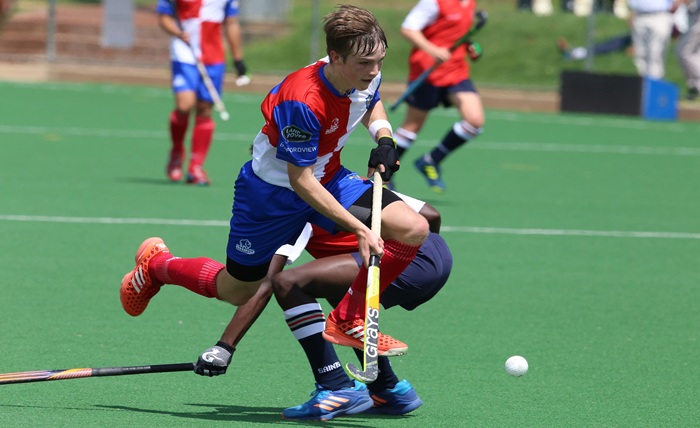
The modern field hockey midfielder is no longer defined mainly as a player who receives the ball from defenders and passes it toward the forwards. The position has become a connection point for almost every phase of play. Midfielders must support possession, progress the ball, press opponents, cover space after turnovers, and arrive in attacking areas when opportunities appear. Hardik Singh represents this model because his contribution depends on movement and decision-making across different zones rather than on one fixed task.
The difficulty is that these responsibilities can change within seconds. A midfielder may support the defense, receive under pressure, carry the ball through a line, and then have to recover after possession is lost. The rapid progression may remind online audiences of formats such as the aviator online game, but Hardik’s actions on the pitch depend on reading space and responding to teammates and opponents. His value comes from connecting phases that are often analyzed separately.
A Midfielder Must Create Passing Connections
Possession depends on passing angles. If defenders have the ball but no midfielder becomes available, the team can be forced toward the sideline or into a long pass with lower control.
Hardik can help solve this problem through positioning.
He may move toward the ball to create a short option or shift away from it to open a passing lane for another teammate. The important factor is not simply receiving possession. His movement changes the geometry around the ball.
When an opponent follows him, space can open elsewhere. When the opponent stays in position, Hardik may become available between defensive lines.
Modern midfield play therefore includes actions that never appear in basic statistics. A movement without receiving the ball can still create the route that allows the team to progress.
Carrying the Ball Can Break a Defensive Line
Passing is not always the fastest method of progression. When opponents leave space between their pressing lines, carrying the ball can force them to make a decision.
Hardik’s ability to move forward with possession is important in these situations.
As he advances, an opponent may step out to challenge him. That movement can release another Indian player who was previously marked. Hardik can then pass into the space created by the defender’s decision.
If nobody steps forward, he can continue gaining territory.
This makes ball carrying a tactical tool rather than simply an individual skill. Its purpose is to manipulate defensive positions and create a passing option that did not exist at the beginning of the move.
Transitions Define the Modern Role
One of the clearest differences between traditional and modern midfield responsibilities is the importance of transitions.
When India wins possession, Hardik must quickly assess whether a counterattack is available. Opponents may be spread across the field after committing players forward. A fast pass or carry can exploit that temporary structure.
However, immediate attack is not always the correct choice. If teammates are too far away to provide support, forcing a forward action may result in another turnover.
The same calculation occurs when India loses possession.
Hardik may need to press the ball carrier, protect the central passing lane, or sprint backward to support defenders. His decision depends on where the turnover occurred and how many opponents are positioned ahead of the ball.
Pressing Requires Collective Timing
Pressing in hockey is not simply running toward the player in possession. Effective pressure depends on several players closing options together.
A midfielder plays a central role because he often connects the first pressing line with the defense behind it.
If a forward pressures an opposing defender, Hardik can position himself to block the next pass into midfield. This may force the opponent toward the sideline, where space becomes easier to control.
The timing must be coordinated.
Moving forward too early can leave space behind him. Waiting too long gives the opponent time to receive and turn.
Hardik therefore has to read both the teammate applying pressure and the opponent preparing to receive.
Defensive Work Is About Space as Much as Tackling
Tackles are visible defensive actions, but midfield defense begins before physical contact.
Hardik can prevent progression by occupying a passing lane. If an opponent cannot receive through the center, the ball may have to move sideways or backward.
This gives India time to reorganize.
His position also matters when full-backs or other midfielders move forward. Someone must protect the area they leave behind in case possession changes.
This balancing function is one of the less visible responsibilities of the position. The midfielder must support attacks without allowing the team to become disconnected.
Good defensive midfield play can therefore mean that a tackle never becomes necessary.
Tempo Is Another Midfield Responsibility
Modern hockey can move at high speed, but constant acceleration is not the same as control.
Hardik must recognize when India should attack quickly and when the team needs to retain possession.
After winning the ball against an unbalanced defense, speed may create an opportunity. During a period when India is losing structure, several controlled passes may be more useful.
The midfielder influences this rhythm through the direction and speed of his actions.
A forward pass can accelerate the phase. A lateral pass can shift the opposition. Recycling possession backward can allow teammates to recover their positions.
These decisions make the midfielder a regulator of tempo.
Supporting the Attack Without Becoming a Forward
Modern midfielders are expected to contribute near the attacking circle, but their movement must remain connected to the team structure.
Hardik can join an attack as a passing option behind the forwards or make a run into space when defenders are occupied elsewhere.
Arriving from midfield creates a different problem for opponents because defensive assignments may already be focused on the forward line.
However, advancing also creates risk. If possession is lost, Hardik may need to recover immediately.
The ability to attack and then return to defensive work is one reason physical capacity has become so important for midfielders.
Why Decision-Making Connects Everything
Hardik Singh’s role illustrates why the modern midfielder cannot be evaluated through goals, assists, or tackles alone.
The position involves choosing between competing actions. Should he carry or pass? Press or protect space? Move forward or remain behind the ball? Accelerate the attack or recycle possession?
The correct answer changes with each phase.
Technical ability allows Hardik to execute these actions, but tactical awareness determines which action he chooses. Physical capacity then allows him to repeat the process across the match.
That combination defines the modern midfield role. The midfielder is not simply positioned between defense and attack. He is responsible for connecting them.
Hardik’s influence comes from operating inside that connection: progressing possession, supporting pressure, protecting space, controlling transitions, and adjusting the tempo. In modern hockey, that makes the midfielder less of a fixed position and more of a player who manages how the entire team moves from one phase to another.